
Forsyth Resident Lookup Sources
Each official record answers a narrow question. QPublic shows who owns taxable land in Forsyth County today. The Clerk's recorded-document index links a party to deeds, plats, liens, or a trade name. Court indexes are narrower. They prove a party appeared in a case. They never prove that every same-named person is the same resident. Georgia vital records document an event. Copies come under strict rules. Pick the row that fits the fact being checked. Then confirm with a second source.
| Record | What It Confirms | Where to Search | Access |
|---|---|---|---|
| Assessor parcel | Owner, tax mailing address, situs, homestead clue | Forsyth QPublic | Free; some safety-sensitive entries hidden |
| Recorded documents | Party role, transaction, legal description | Clerk Resolution eSearch | Guest index; images or certification may cost |
| Voter registration | Personal status, polling place, districts | Georgia My Voter Page | Free personal lookup; public lists governed by law |
| Court docket | Case, party role, dates, status | Provider or courthouse terminal | Account online; public terminal at courthouse |
| Vital and probate records | Marriage, death, estate, executor or heirs | DPH, Probate Court, Superior Clerk | Eligibility and redaction rules vary |
| Business or license file | Entity affiliation or credential status | Georgia SOS searches | Free basic searches |
A name plus an address usually starts at QPublic. A known lawsuit points to the court directory instead. A company name belongs in the corporations search before anyone assumes its registered agent owns anything. Estate questions work in reverse. Begin with the decedent's obituary or cemetery entry, then ask Probate Court for the case and inspect later deeds. This order keeps a resident lookup from forcing one record to prove more than it can.
Confirming Forsyth Residents in Court
The Georgia Court E-Access directory routes Forsyth Superior and State Court searches to account-based providers. Select the county and court first. Then search a party or case number. Case type and filing dates can narrow a common name. Superior Court handles felonies, divorce, land-title matters, and broad civil disputes, while State, Magistrate, Probate, Juvenile, and Cumming Municipal courts each keep their own files. Jurisdiction matters, in other words.
A public docket may list a case number, court, case style, filing date, parties and roles, attorney, docket events, hearings, judge, and disposition. It is an index of a proceeding, nothing more. The party named there is not automatically the person sought. Treat it as a match only when dates, an associated party, a filing address, or a property description agree.
The official routing page for this route is the Georgia e-access directory.
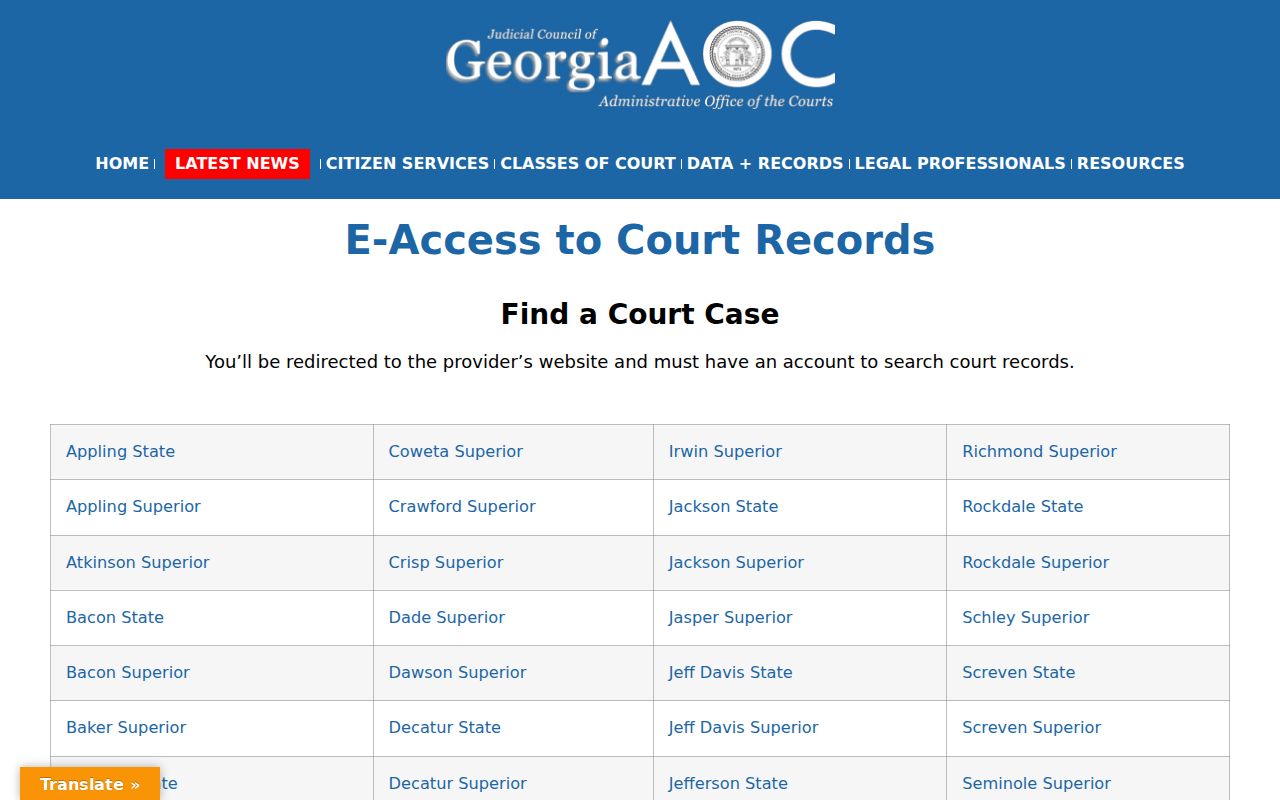
That page only routes searches. When a provider account or an online document view gets in the way, the courthouse terminal still matters for a Forsyth County resident lookup.
Forsyth Lookup Beyond Web Access
Courts are not online only. Public-access terminals at the Clerk of Court, Forsyth County Courthouse, 101 E. Courthouse Square, first floor, Suite 1007, connect to eFileGA and the case-management system. Anyone may use them to view public records. Once a case number is known, ask the copy desk about a document or a certified copy. Magistrate, Probate, and Municipal Court files may need a request to that court's clerk. Sealed files stay closed. Juvenile, adoption, and other restricted material is closed too.
Federal cases run through PACER. They sit in the Northern District of Georgia. An account is required, and pages cost ten cents, generally capped at three dollars per document, with quarterly charges of thirty dollars or less waived. The PACER public-access page shows this separate federal route.
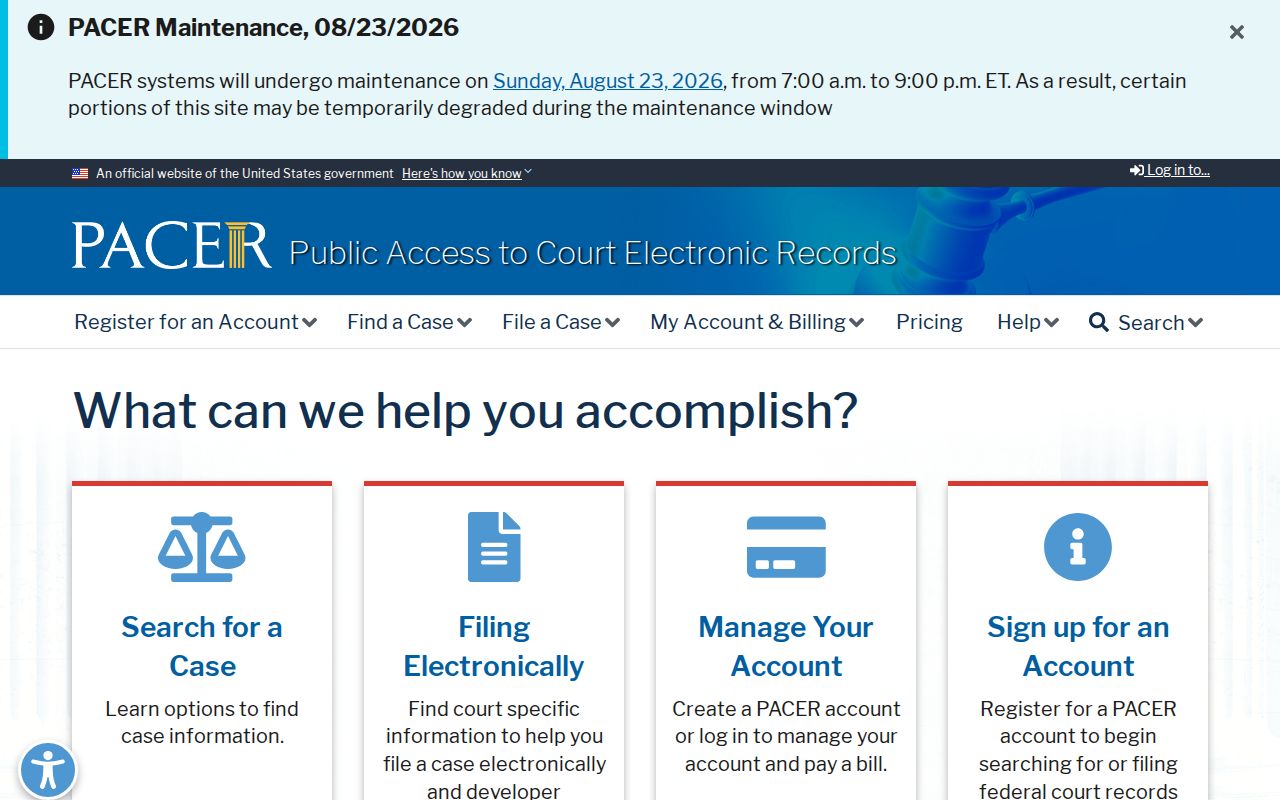
Save that federal account for cases that truly belong in federal court. It does not replace Forsyth's local court desks. Local clerks still hold the primary records.
Note: A web account requirement limits the delivery channel, not the public status of the court's dockets.
Forsyth Voter Lookup Distinctions
The Georgia My Voter Page is built for a voter checking their own record. Enter first initial, last name, county, and birth date. Results can show registration status, polling place, districts, elected officials, a sample ballot, and ballot status. No free search covers every resident at an address.
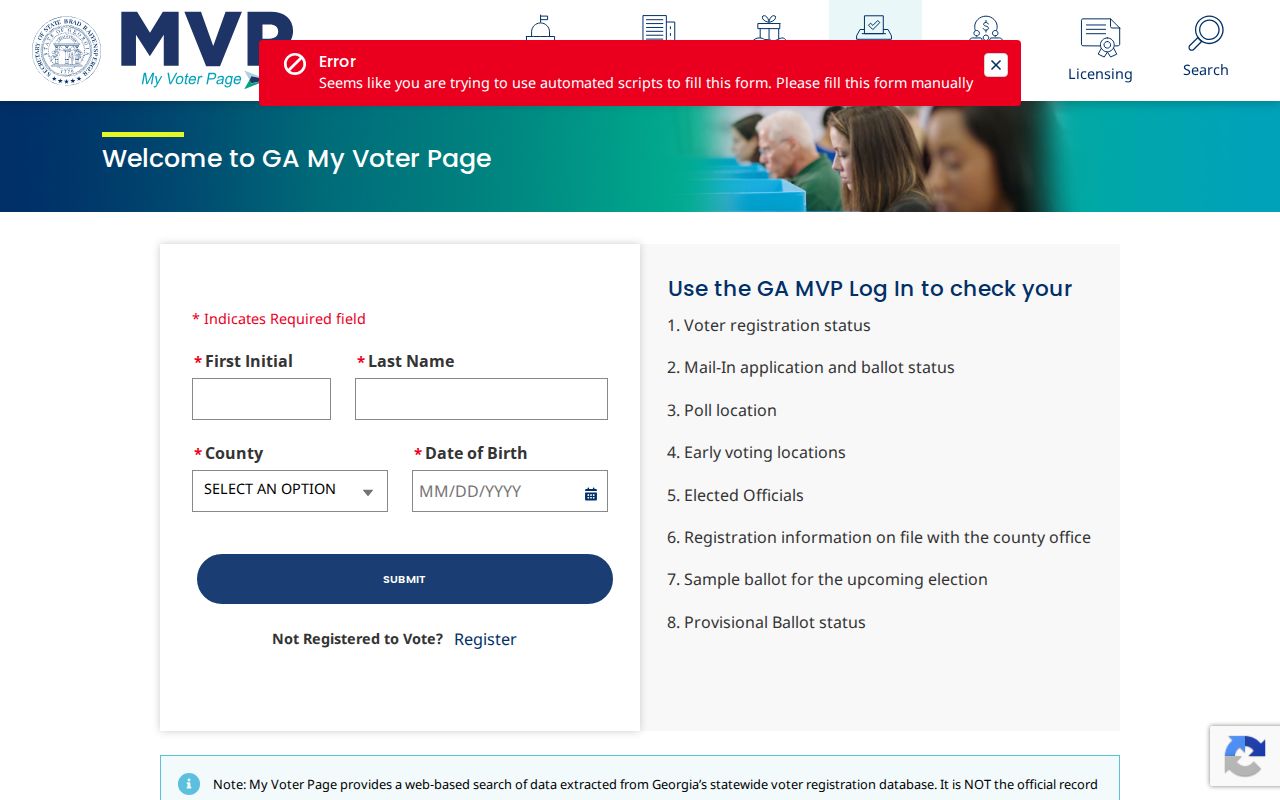
The form shows why voter status and a public voter list are different channels. Purchased lists include names and addresses. Under O.C.G.A. sections 21-2-225 and 21-2-601, they exclude dates of birth. Social Security numbers, driver's-license numbers, and phone numbers are left out too. Commercial use is a misdemeanor. VoteSafe can omit protected voters. So a missing result never settles whether someone lives in Forsyth County.
Verify a Forsyth Resident Match
Start with variants of the name. Try a middle initial, suffix, prior surname, hyphenation, or a trust or estate form. Include a business entity where that fits. Then anchor the possible match to a key that is less ambiguous. In Forsyth County records, parcel IDs, legal descriptions, case numbers, license numbers, spouses, and event dates all beat a common surname. A common surname paired with a Cumming mailing address is even weaker. That is what makes a resident lookup hold up.
- Search QPublic by owner name. Record the parcel ID, owner mailing address, physical address, and any homestead clue without calling it proof of the whole household.
- Search the court party index using the name and variants. Narrow by court, case type, filing date, and known case number where possible.
- Compare a second independent source, such as a deed, public marriage verification, probate filing, business record, or professional license.
- Order a certified copy from the actual custodian when legal proof is needed. Correct errors with that office, not with a downstream compilation.
- Docket
- The court's dated list of filings and events in one case.
- Index vs image
- An index identifies a record; an image displays the filed document and may have a separate access fee.
- Certified copy
- A copy authenticated by the custodian for official use.
Researching a whole road rather than one person? The Forsyth County street directory explains how address ranges connect to parcel records.
Forsyth Resident Vital Evidence
Georgia's State Office of Vital Records keeps birth and death records from January 1919 onward. Access stays tight, though. Under O.C.G.A. section 31-10-26, birth certificates reach only the registrant plus qualifying family or legal representatives. Yet a plain-paper death copy is open to anyone. The state removes the Social Security number first. Certified death copies carry their own eligibility rules. The Forsyth County Health Department serves as the local registrar for both. Forsyth Probate Court handles marriage licenses. It also supplies copies for licenses it issued.
State marriage applications and certificates span June 1952 through August 1996. State verification is newer. It starts January 1, 2014. Other years belong with the issuing county. The Georgia vital-record request guide spells out the online, mail, and walk-in routes. Vital filings like these anchor a Forsyth County residents directory more firmly than any guesswork.
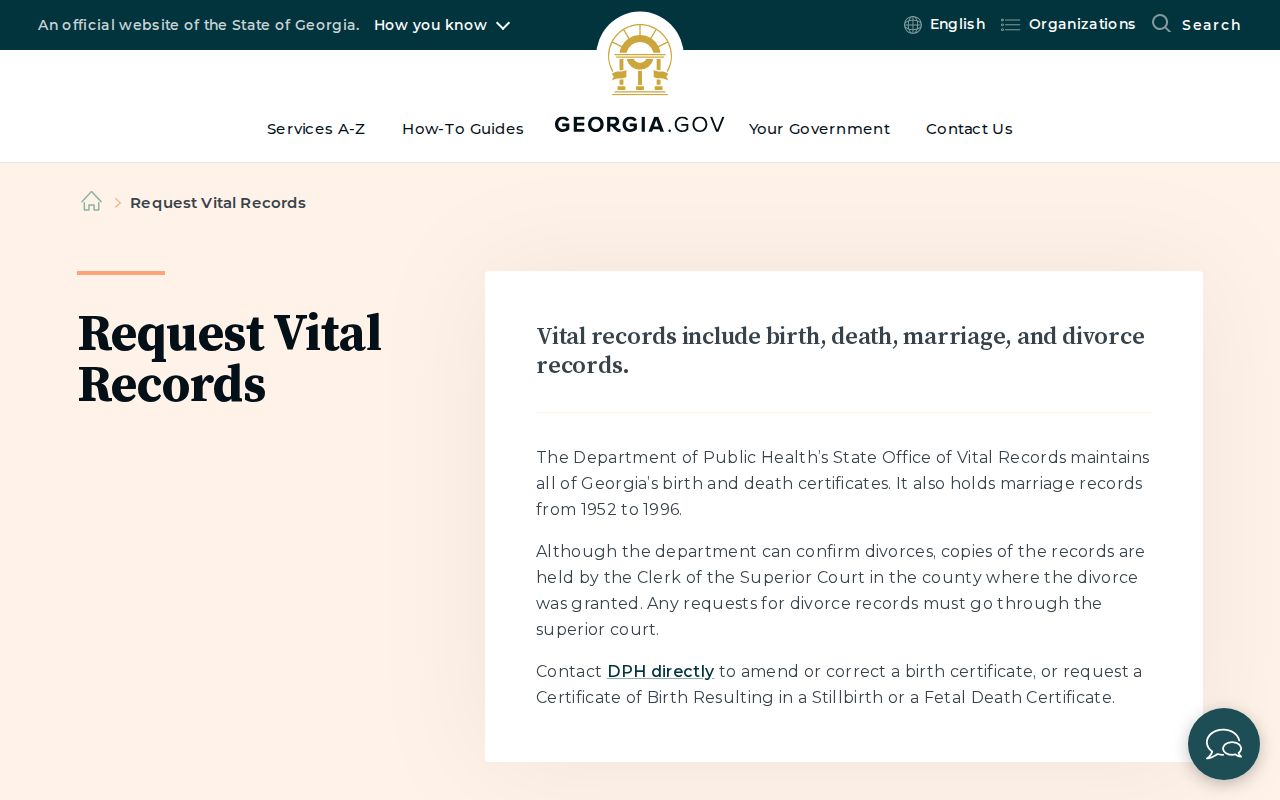
Modern births are nothing like an open resident index, so the request route matters. Eligible requesters must show ID. Proof of relationship or legal authority comes with it. In 2026, birth and death searches cost $25 with $5 additional copies on the same order, marriage searches run $10, and every search fee is nonrefundable.
Finding Forsyth Heirs Lawfully
The best heir search starts from the deceased person outward. Confirm identity and relatives first. A local obituary, cemetery transcription, or death record does that work. Then ask Forsyth Probate Court for a public estate case by decedent or case number. Petitions, orders, the executor, and heirs may all appear. Estate deeds filed later, in the Clerk's Resolution index, show how title moved.
The Forsyth Historical Society cemetery book is a gem. It holds more than 23,000 inscriptions from more than 90 cemeteries, plus a 114-page every-name index. The library also points researchers to the Forsyth Herald, historic newspapers, the Georgia Archives, and genealogy databases. These sources bridge spelling and kinship gaps. Each claim still needs an official filing or record behind it, though.
Andee's Law took effect July 1, 2025. It creates a distinct route for an adult Georgia-born adoptee to obtain an uncertified original pre-adoption birth certificate, with a descendant route when the adoptee has died. Treat it as an official request process. It is not a public birth-name search.
Confirming Forsyth Business Connections
Matching names cause trouble. A business connection can separate two people who share one. The Georgia Corporations Division Business Search accepts a business name, control number, or registered-agent name. Results may show legal name, entity type and status, formation details, principal office, agent, and filings. One caution applies. A registered agent is a statutory contact, not necessarily the owner or a resident at the listed address.
Licenses help too. The Georgia professional-license search takes profession or board, license type or number, name, city, and state. It confirms status plus public discipline information where offered. Local assumed names live in the Clerk index. Its trade-name coverage begins November 29, 2005, and county or city licensing records may supply an existing record where no public search exists.
These tools are identity anchors, not household records. Search an entity name in the firm-name field, and use the Clerk's Same Instrument control when co-parties on a deed might explain the connection within a Forsyth County residents directory trail.
Limits on Forsyth Resident Lookup
Some missing records are missing by design. Georgia VoteSafe shields the residence address of a voter exposed to family violence or stalking. Safe at Home adds an address-confidentiality structure for eligible survivors. Forsyth's Board of Assessors accepts safety-sensitive removal requests too. The removal covers assessor and tax-payment searches and requires work-role plus state-ID verification.
The Georgia Open Records Act, O.C.G.A. sections 50-18-70 through 50-18-77, is the fallback for an existing, nonexempt agency record. Keep the request narrow. Name the person, case, address, date, or record number. Production is due within three business days when practical. Otherwise the agency must supply a timetable, estimated cost, and exemption authority in that window. It need not create a new resident list for a resident lookup.
Lawful use. Use a Forsyth County resident lookup only for lawful personal, family, safety, or civic research. Never stalk, harass, threaten, or intimidate anyone.
Protected data covers Social Security numbers, account information, medical or insurance details, and the home addresses and phones of specified officials. Ask for the releasable part. Exempt fields come out redacted. When an official record is wrong, contact the assessor, Clerk, elections office, DPH, or licensing board that created it.