
Forsyth Previous-Resident Sources by Era
One address can cross three record eras. Recent Forsyth County research is parcel-centered, the middle years rely on deeds, plats, permits, telephone books, and newspapers, and early work depends on county books, census, church, cemetery, marriage, and probate evidence. The strongest answer joins title and household sources instead of asking one record to do both jobs.
| Source | Forsyth coverage | Where held | What it shows |
|---|---|---|---|
| Online land index | January 2, 1980 to present, with a 1998 system division | Clerk Resolution eSearch | Grantors, grantees, instruments, dates, and book or page clues |
| Recorded plats | January 1, 1961 to present | Clerk index and office | Subdivision, lot, block, roads, and easements |
| Older deed books | County formation era onward, subject to surviving volumes | Clerk and Georgia Archives | Title chain and durable legal descriptions |
| Federal census | Forsyth schedules through 1950 are public | NARA and library databases | Households, kin clues, ages, birthplaces, and occupations |
| Marriage abstracts | 1833 through 1933 | Historical Society publication | Couples, dates, and surname links |
| Permit reports | Published reports from 2021 onward | County CSS, GIS, and requests | Construction dates and named project participants |
| Reverse directories | No verified continuous local run | Ask library and Historical Society | Address-to-occupant evidence if a specific volume exists |
Choose the first source by the target date. For a recent transfer, begin online. For an address before 1980, expect courthouse books. For a nineteenth-century farm, start with the legal land description, deeds, tax material, census, and local family sources rather than a modern street number.
Start With Today’s Forsyth Parcel
Search the exact location address in Forsyth QPublic. Save the parcel ID exactly as displayed, the legal description, current owner spelling, mailing address, sales entries, and any deed book, page, or instrument clue. The situs address locates the land. The mailing address only tells where a tax notice goes. If they match, that supports but does not prove owner occupancy.
A parcel card may also show acreage, tax district, homestead indicator, appraised and assessed value, improvement details, building sketches, photographs, and a map link. Trust, estate, company, joint-owner, and care-of entries require special care. Open the recorded deed rather than turning an entity name into an assumed person. This first capture becomes the control sheet for every later step.
- Legal description
- The lot, block, subdivision, or metes-and-bounds wording that identifies land even when its street label changes.
- Chain of title
- The linked sequence of recorded transfers from one owner to the next.
- Grantor
- The party transferring an interest in the deed being read.
- Grantee
- The party receiving that interest.
Walk Forsyth Deeds Backward
The Forsyth Clerk Resolution eSearch is the main online bridge from today's parcel to prior owners. It searches names and entities rather than relying on street addresses. Match legal descriptions at every transfer because common names, trusts, partial interests, quitclaims, estate deeds, and corporate transfers can create false branches.
- Search the current owner as grantee near the parcel card's sale date. Open or request the acquisition deed.
- Confirm that deed's legal description against the current parcel. Record the instrument number, date, party roles, and any referenced plat.
- Take the grantor from that deed and search the same party as a grantee at an earlier date.
- Repeat one instrument at a time. Use the Same Instrument control to find co-parties without guessing family ties.
- At the 1980 online boundary, move to the Clerk's general indexes and deed books, then check Georgia Archives microfilm.
The successful manifest capture shows the official grantor and grantee entry point.
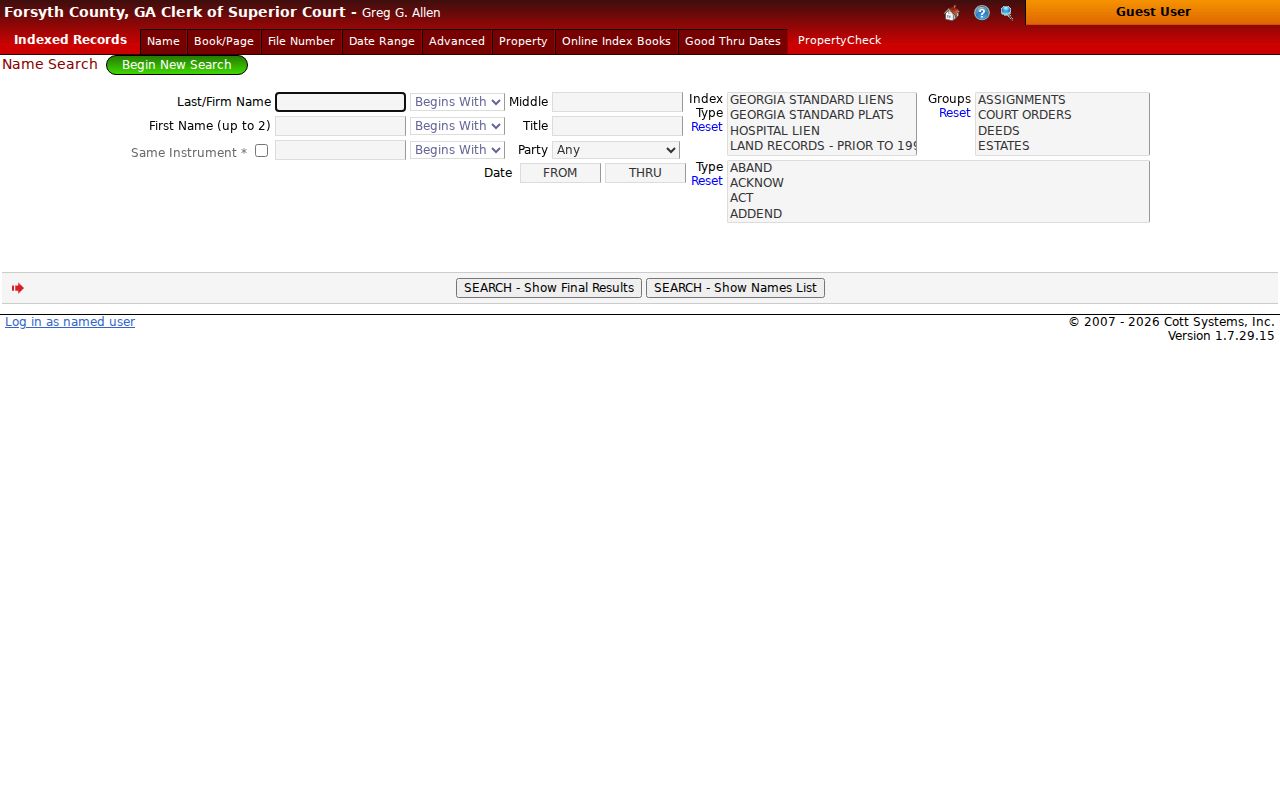
The fields support surname variants, party roles, date limits, index families, and document types, which is why a recorded identifier is stronger than a name alone.
Cross Forsyth’s 1980 Cutoff
The online split is precise. Prior land records cover January 2, 1980 through December 31, 1997, while the statewide land system begins January 1, 1998. Plats begin in 1961, liens in 1991, and trade names in 2005. Current-through dates change as new filings enter the system.
The Clerk publishes those dates on a separate official page.
Check the live Forsyth land-index coverage dates.
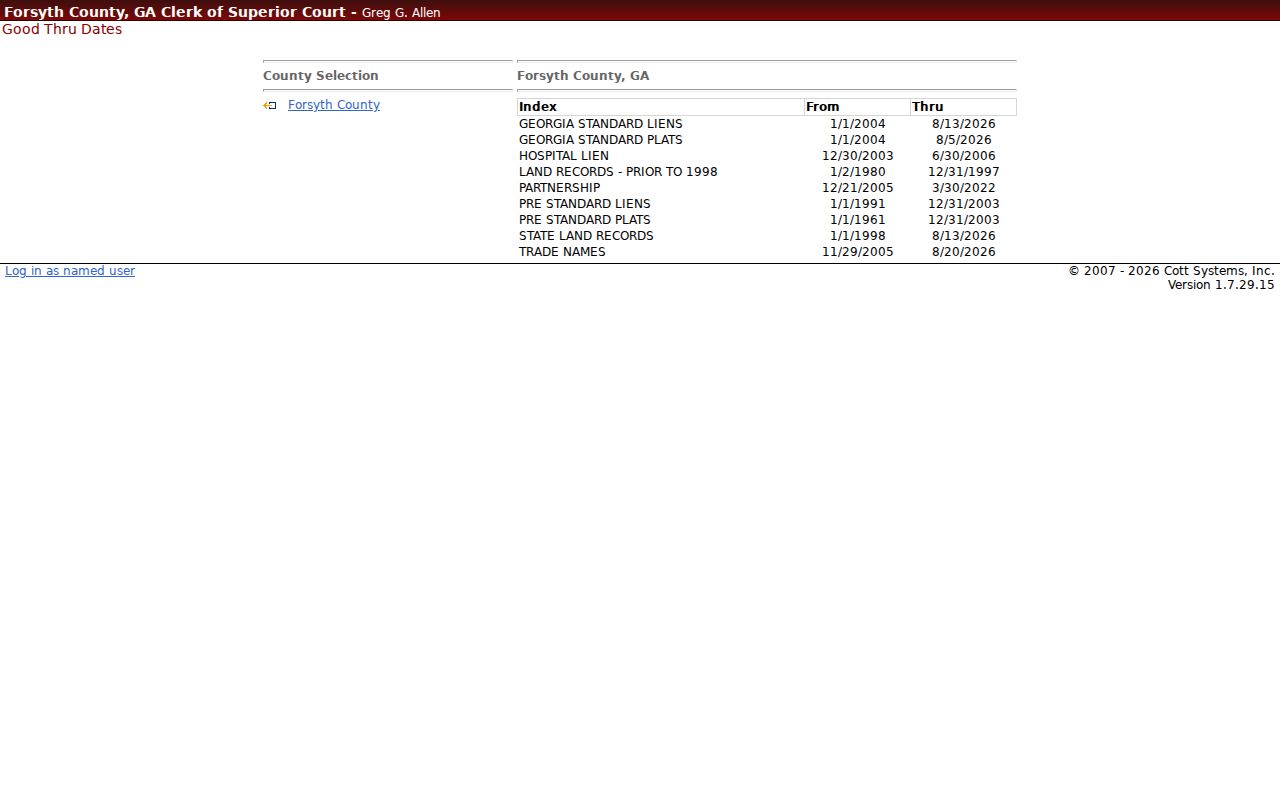
The page makes clear that 1980 is an online start, not the county's historical beginning.
Earlier links require the real-estate counter at the Clerk of Superior Court and the old general grantor and grantee indexes. Georgia Archives county cards identify microfilmed books. The Archives generally filmed pre-1900 county records and may include a full book that starts before 1900 and ends later. Read the volume dates instead of assuming that all work stops at a round cutoff.
Note: Keep book, page, instrument, and legal-description details before leaving each system, because they make an offline request precise.
Forsyth Plats Preserve Old Land
Modern numbers can be poor guides to previous residents. Forsyth changed from rural farms and community descriptions to named subdivisions and commercial corridors. Cumming remained the postal city for large unincorporated areas, while some county addresses use Alpharetta, Suwanee, or other mailing cities. A postal label does not settle city jurisdiction or historical identity.
Plats provide a more durable bridge. A subdivision name, lot, and block can survive a changed road label. Deeds may cite that plat even when they omit today's number. Forsyth's indexed plats reach 1961, while older deeds and tax maps can carry the chain farther. County GIS helps compare present parcels, but its boundaries are representations rather than certified surveys.
No official source established a countywide street-renumbering year. There is also no verified digitized Cumming Sanborn map run in the research. Treat rural-route conversion, road renaming, and new subdivisions as parcel-by-parcel questions. Search “Cumming, Forsyth County, Georgia,” since “Forsyth, Georgia” often retrieves the City of Forsyth in Monroe County and the wrong maps.
Previous Owners Are Not Residents
A deed proves a title event, not who slept at the property. A parcel card identifies the taxable owner and the mail route. Neither captures every renter, child, relative, caretaker, or guest. This distinction is the core of previous-resident research.
Once the ownership line is stable, add one household source for each era. A reverse directory can connect an address to a published occupant, but Forsyth County Public Library does not publish a complete online list of Cumming telephone or cross-reference years. Ask staff for the exact volume and citation. The Historical Society can also help identify local books, newspapers, family files, cemetery work, and maps.
The full local collection context belongs on the Forsyth County city directory page. For one house, record the directory year, printed spelling, full address, and every abbreviation. Do not carry an occupant forward into a year the volume does not cover.
Evidence rule. Label a person as an owner, probable occupant, or documented household member according to the record actually found.
Pair Forsyth Houses With Census
Federal population schedules are public through 1950 under the 72-year rule. The 1960 census is due for release in 2032. Forsyth schedules can show household members, ages, relationships, birthplaces, occupations, and varying address detail. Rural enumerations may use roads, communities, or enumeration districts instead of a modern number.
Use a simple pairing process after the deed chain is known.
- Choose a public census year that falls inside one owner's tenure.
- Search the owner and household with name variants, nearby families, road names, and community terms.
- Compare ages and relationships with marriage, cemetery, newspaper, and probate evidence.
- Check adjacent available directory or telephone-book years if the local repository confirms them.
- Record disagreement rather than forcing two similar names into one identity.
The 1890 population schedule is largely destroyed nationwide. Bridge that gap with deeds, tax material, marriage records, newspapers, churches, cemeteries, and probate. Forsyth's local marriage abstraction begins in 1833, immediately after the county's 1832 creation, which gives early household research a strong name source.
Close Forsyth Household Trails
Probate, obituaries, cemetery inscriptions, marriage evidence, and death records can explain why a name disappears. They may connect heirs, former communities, spouses, and estate deeds. The Historical Society's cemetery book contains more than 23,000 inscriptions from over 90 cemeteries and includes a 114-page every-name index. Its marriage volume covers 1833 through 1933.
Vital records have access rules and should not be treated as a public resident roll. Georgia birth certificates are restricted to the registrant and qualifying family or legal representatives. The official birth route is shown here:
Review Georgia birth-record eligibility and request methods.
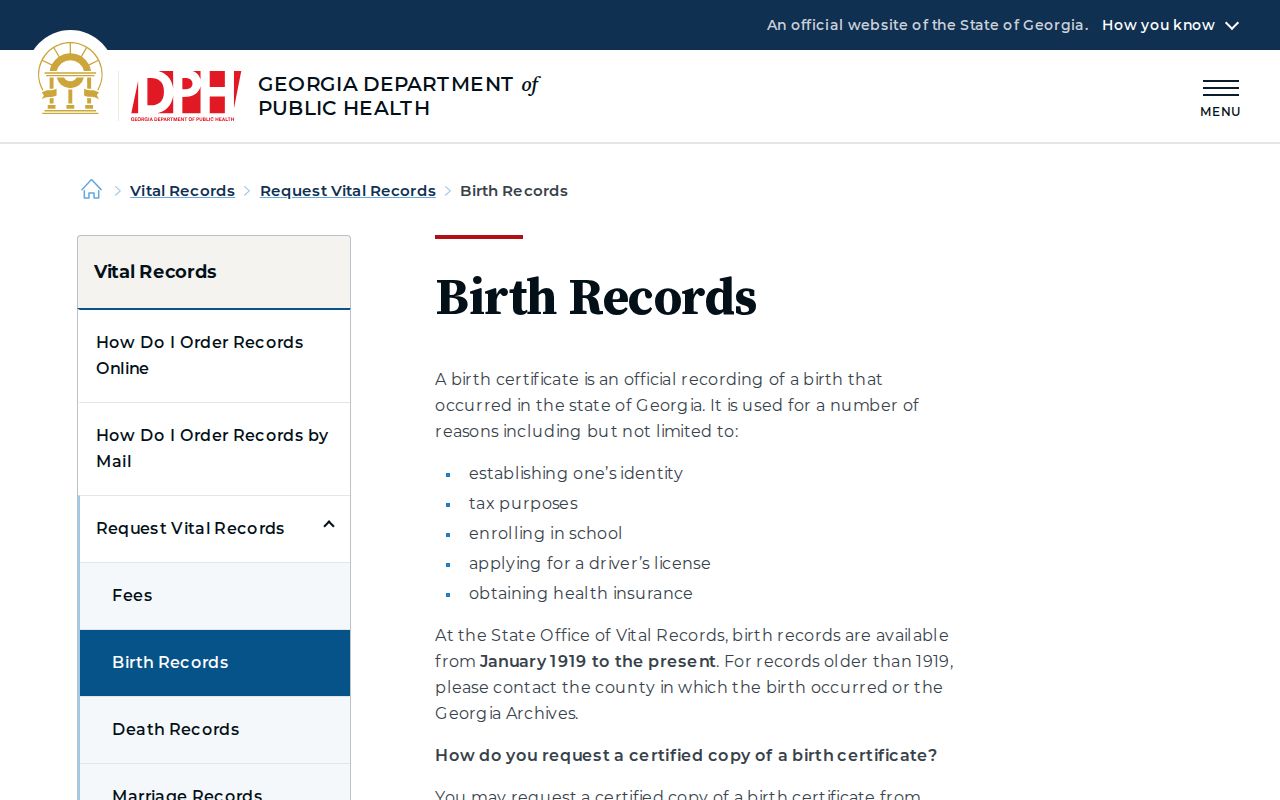
The state page helps a qualified requester choose the proper application rather than treating birth files as an address index.
Death certified copies require a qualifying relationship or tangible interest, while the public may obtain a plain-paper death copy with the Social Security number redacted.
Compare Georgia death-record copy options and access rules.
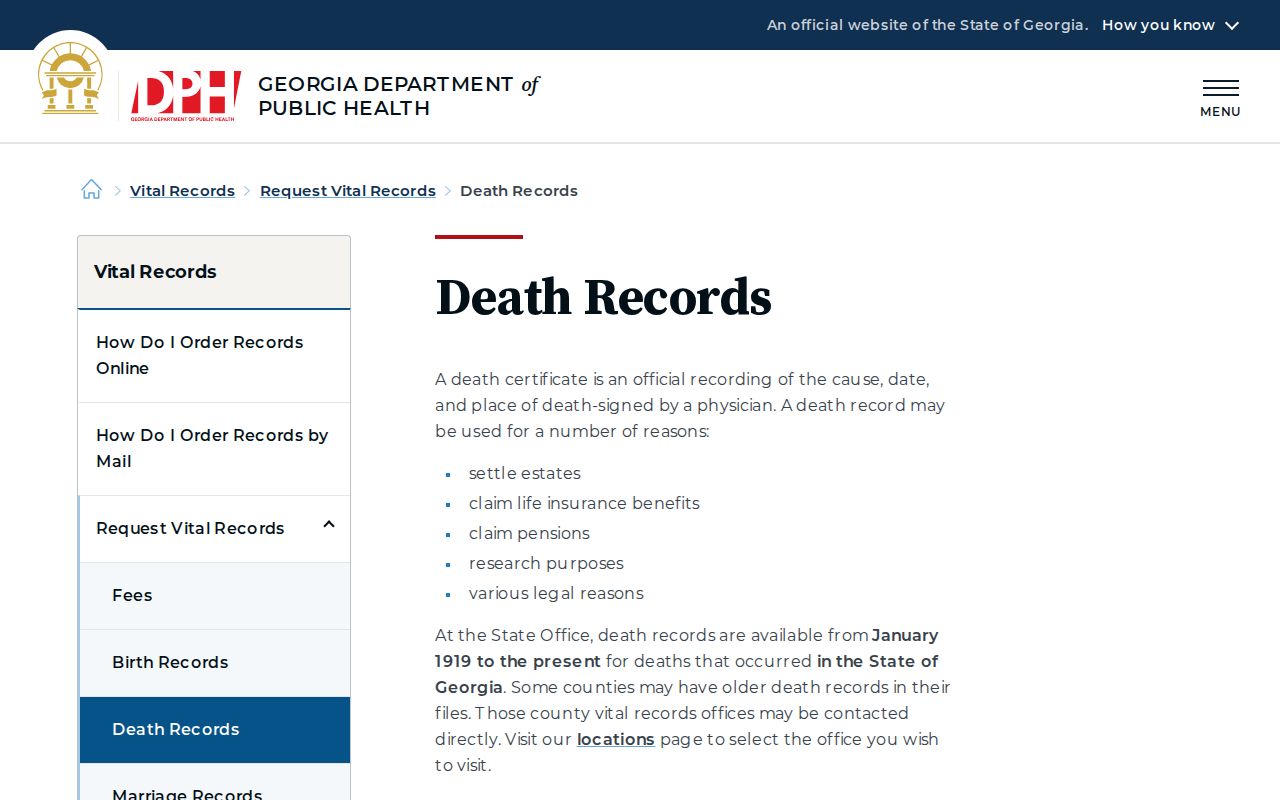
Death evidence can support an endpoint, but the deed or probate file is still needed to explain what happened to title.
Georgia's state marriage holdings cover applications and certificates from June 1952 through August 1996, plus verification from January 1, 2014 onward. County offices cover other periods.
See Georgia marriage-record coverage and mail instructions.
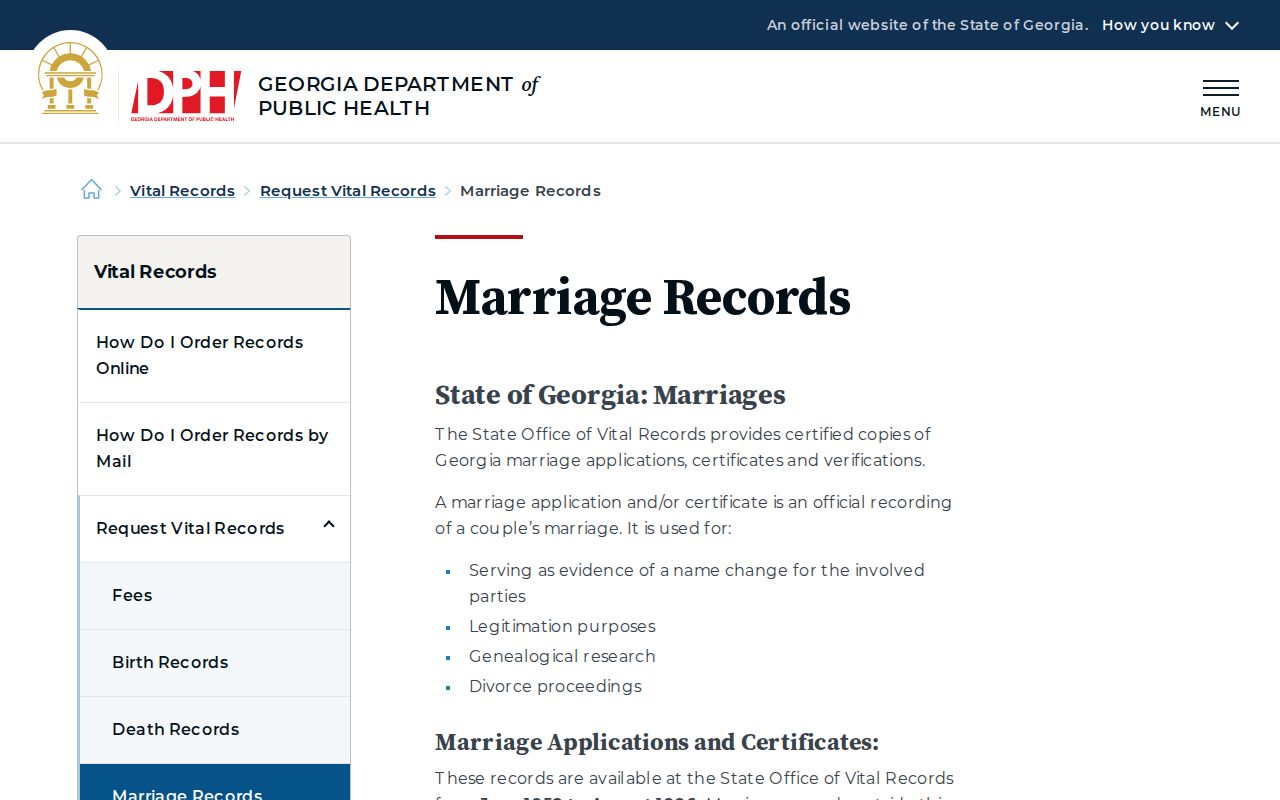
The date limits show why local marriage books and the Probate Court remain part of a Forsyth household search.
Forsyth Estates and Unclaimed Property
A former resident's trail can end outside the address record. Probate files may identify a decedent, personal representative, heirs, estate property, and transfers. Obituaries and cemetery sources add family or community context. Newspaper legal notices can point to estates, foreclosures, name changes, and land descriptions, but each notice records an event rather than continuous residence.
Georgia's official unclaimed-property program offers another name-based lead for a person or estate.
Search or review claims through Georgia Unclaimed Property.
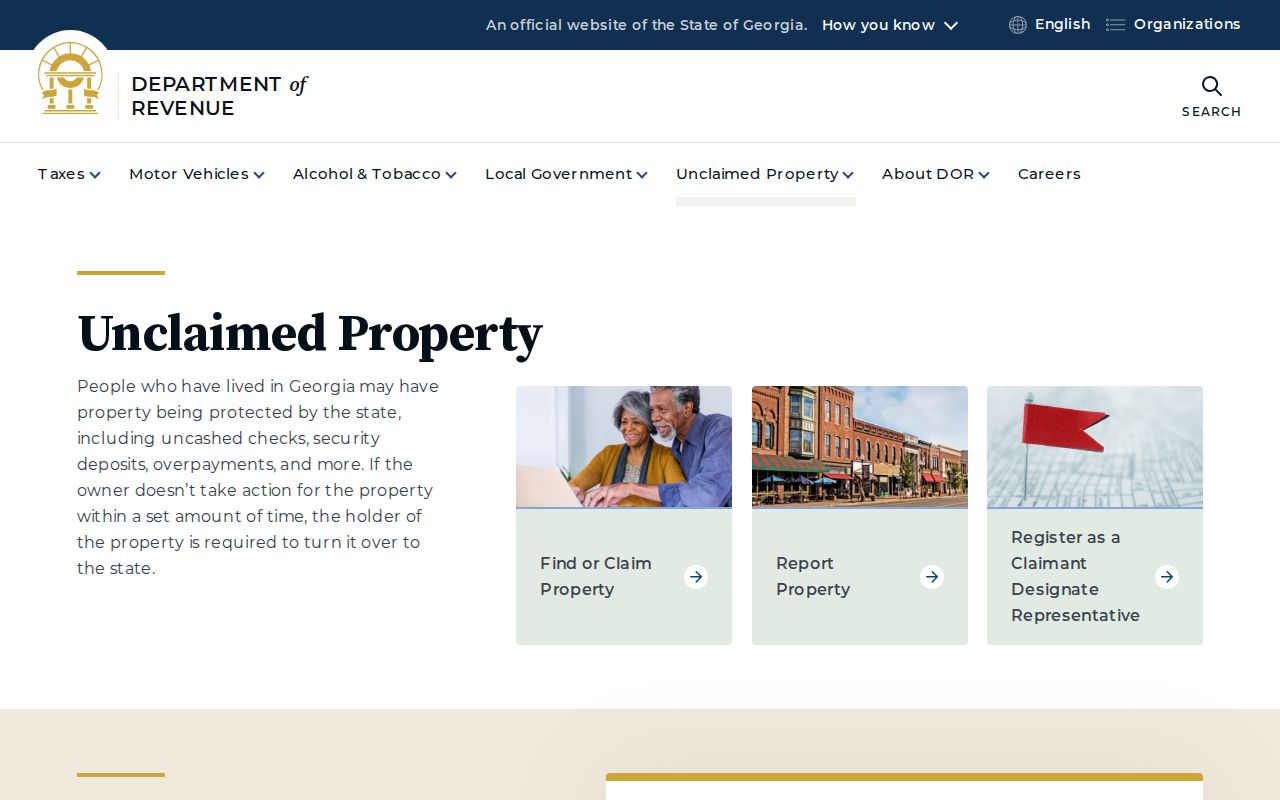
A result may support a name or prior mailing clue, but it should be matched to dates, parcel records, and family evidence before being assigned to a former household.
The Historical Society and Forsyth County Public Library are practical gateways when the trail moves offline. Library resources route researchers to Georgia Archives, Digital Library of Georgia, FamilySearch, NARA, historic newspapers, cemetery databases, and university collections. Some databases require a card or branch computer.
Use Forsyth Previous-Resident Records Lawfully
Some information is intentionally unavailable. Driver addresses are protected. Utility customer data is not a general public directory. Georgia VoteSafe and Safe at Home protect qualifying people, and Forsyth accepts a safety-sensitive request to remove personal details from assessor and tax-payment searches. A missing address can reflect lawful protection rather than a gap to defeat.
Commercial compilations often merge tax, voter, and marketing files. They can confuse owner with occupant or keep a person at an address long after a move. Confirm title with the Clerk, parcel facts with the assessor, household history with dated primary sources, and life events with the proper custodian.
Lawful use. Research previous residents for house history, genealogy, heir matters, or personal curiosity, never to track, stalk, harass, threaten, or harm a living person.
When an existing county record is not online, send a narrow Georgia Open Records Act request to the responsible office. Identify the address, parcel, record type, and date range. Production is due within three business days where practicable; otherwise the agency must provide a timetable, cost, and exemption citation. The law does not require an office to create a new occupancy report.