
Forsyth County Directory Collections
The sound Forsyth County city directory is a combined shelf, not one verified commercial run. No official catalog reviewed for this project listed a continuous Cumming annual directory, complete reverse-directory run, or digitized Cumming volume. The known collections below name spouses, families, landholders, students, church members, and people recorded at death. Access ranges from free web discovery to a branch database or archive request.
| Name collection | Years or span | Custodian | Access route |
|---|---|---|---|
| Forsyth marriage abstracts | 1833 to 1933 | Historical Society | 392-page published book |
| County cemetery inscriptions | Historic stone dates | Society and local repositories | Book with every-name index |
| Heritage Book | 1832 to 2011 | Historical Society | Compiled family histories |
| County-record microfilm | Mainly pre-1900 books | Georgia Archives | Virtual Vault cards, then archives |
| Federal census | Surviving public schedules, 1840 to 1950 | NARA and library databases | Online or library account |
| Historic newspapers | Varies by title | DLG, Chronicling America, FCPL | Online and licensed databases |
| School and telephone books | Exact local runs unverified | Ask library, schools, and society | Staff inquiry |
Before visiting, ask the Forsyth County Public Library desk for the title, year, format, call number, and branch. Ask the Historical Society the same questions. This check prevents an Atlanta volume or a directory for the City of Forsyth in Monroe County from being mistaken for Cumming and Forsyth County.
Why Forsyth County Reads Differently
Forsyth County formed from Cherokee County territory in 1832. Cumming became the seat and remains the county's only incorporated city. Early names cluster in deeds, tax books, court and probate files, marriage records, census sheets, and church or cemetery sources. That pattern reflects a rural county, not a missing history. A classic city directory arranged by surname and street would have captured only part of the community.
Modern street labels can hide the older trail. Rural routes, farms, crossroads, and community names later became subdivision streets and numbered addresses. A search for Matt, Coal Mountain, Silver City, Sawnee, or an old road name may work better than a modern postal address. Legal descriptions and family names are often more stable than the street number.
Absence is a clue, not a conclusion. Exclusion from conventional accounts, migration, a changed surname, a shifted jurisdiction, or a record kept by a church can explain why one person does not appear in the first source.
Forsyth County Library Research Map
The Forsyth County Public Library genealogy portal maps records held across institutions. It points to the Historical Society, Forsyth RootsWeb and USGenWeb, Georgia Archives, Digital Library of Georgia, FamilySearch, Chronicling America, NARA, cemetery sites, historic maps, and university collections. Its eLibrary database list identifies Georgia history resources, a Forsyth Herald edition, and a large genealogy database. Some licensed sources need a card or branch computer.
The library is the best place to ask about telephone books, school annuals, newspaper dates, obituary files, and local material not fully described online. Give the person, date range, community, and known relative. Staff can identify a catalog title without being asked to create a family report.
The official genealogy portal shown below is the route into that research network.
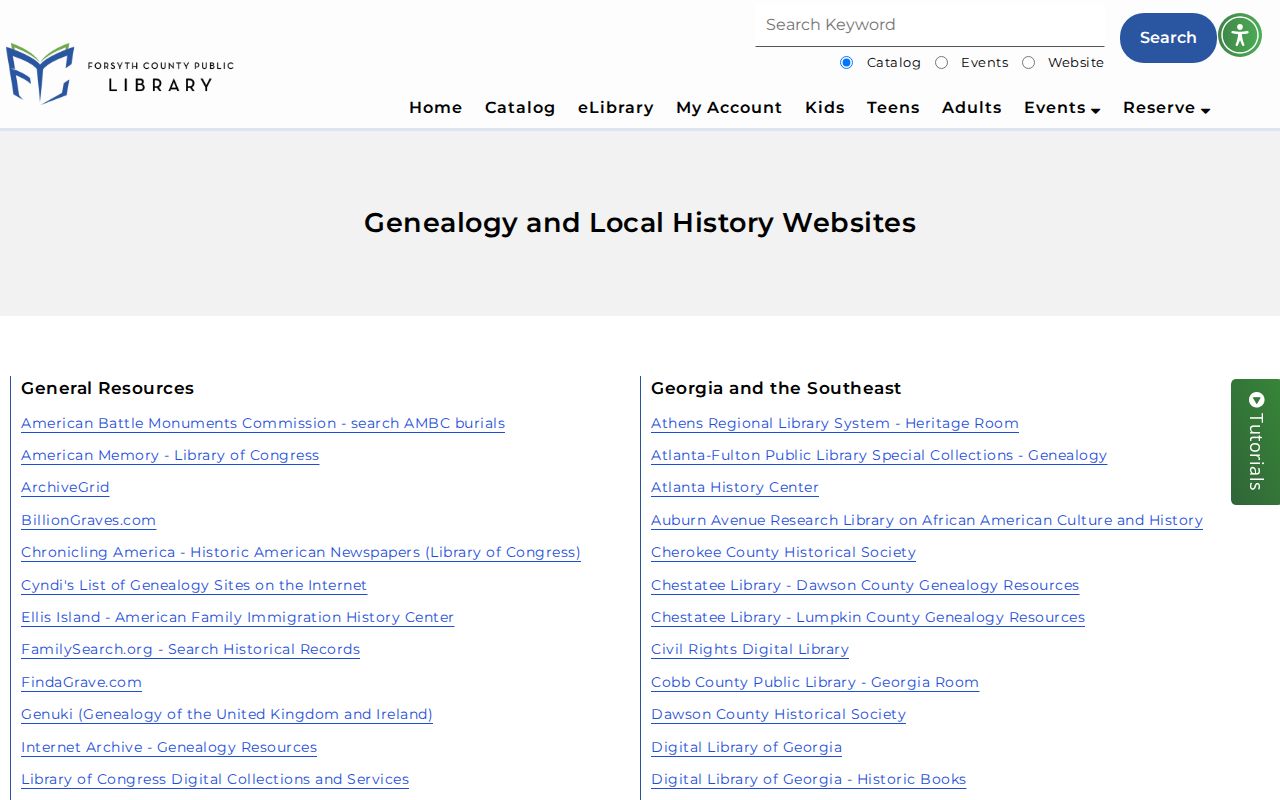
Its links bridge a local name to state and federal evidence.
The library database view adds subscription and local-news paths.

Confirm whether the chosen database works remotely or only in a Forsyth County branch.
Forsyth County Indexed Local Books
The Historical Society supplies the strongest local substitutes for a conventional city directory. Its book catalog lists marriage, cemetery, church, and county-history works. The marriage abstract spans 1833 through 1933. The cemetery volume has more than 23,000 inscriptions from more than 90 cemeteries, fills 663 pages, and includes a 114-page every-name index. It is a major countywide name tool.
The Heritage Book of Forsyth County 1832–2011 and the centennial history for 1832–1932 add family sketches and community context. Submitted histories are leads, not final proof. Check each relationship or date against a deed, census page, marriage entry, newspaper, probate file, or grave record.
The society's family genealogy page gathers routes to deeds, wills, maps, and census material.
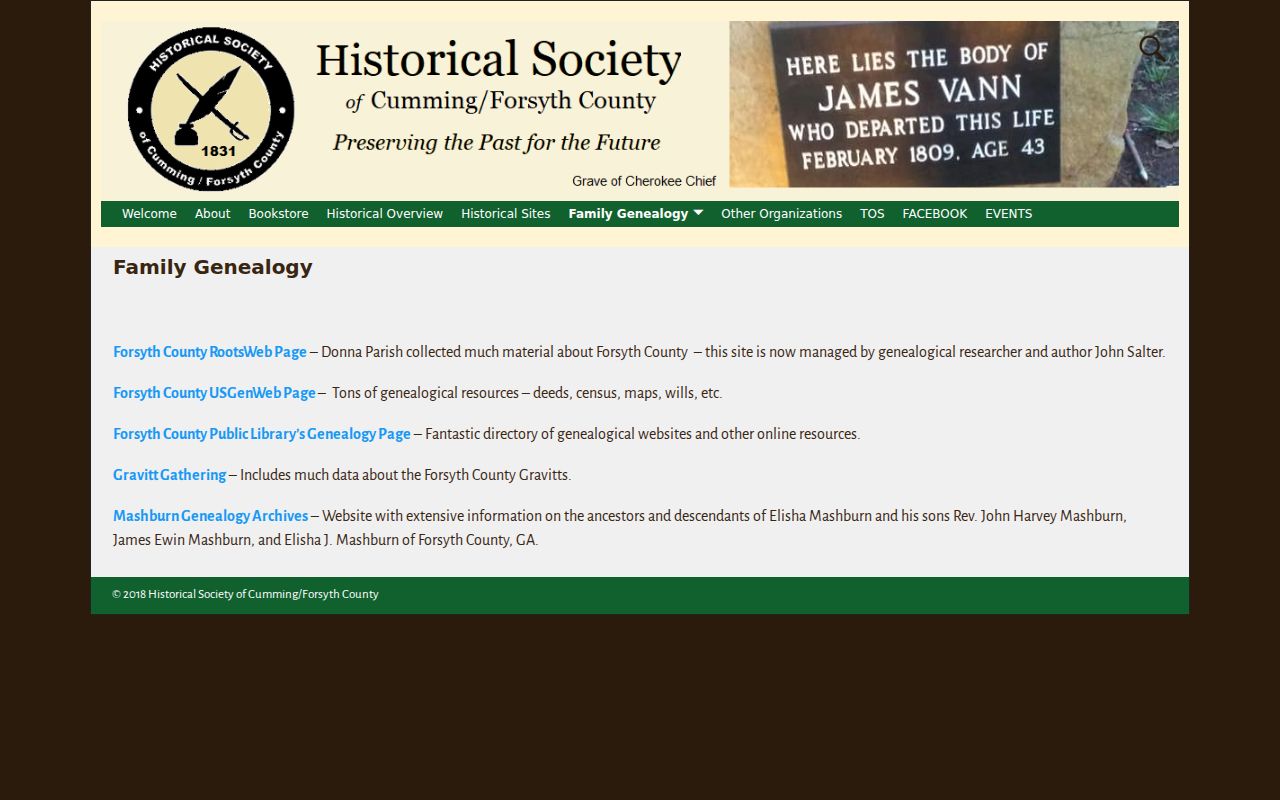
This local focus helps when a statewide surname search returns too many people.
The book page supplies the publication trail.
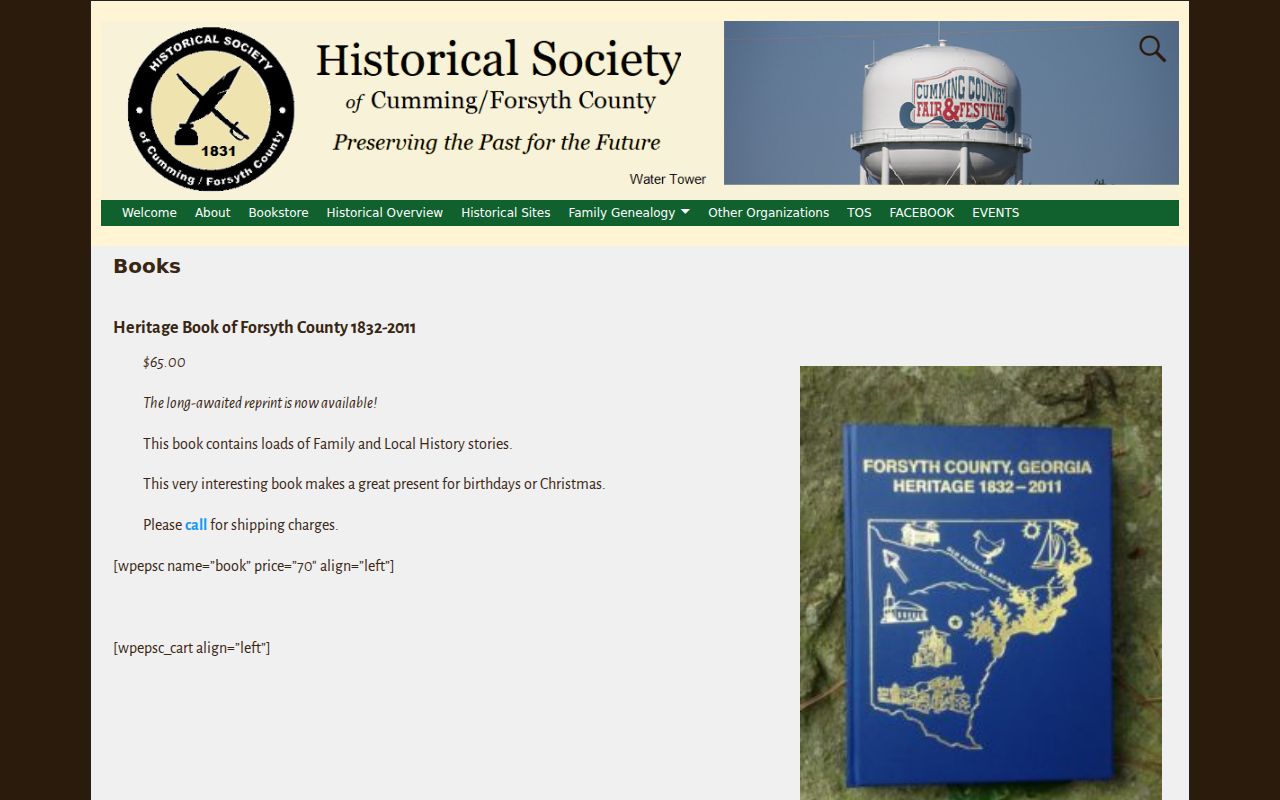
Use each title's index, then read the full entry and source notes.
Decode a Forsyth County Entry
No official digitized Cumming city directory page was verified, so this reading key is general. It explains fields often found when a local telephone book or city directory surfaces. Copy the key printed in that specific volume. Publishers changed marks, shortened words, and did not record every adult in a home.
| Name | Usually the listed person; a spouse may appear in parentheses. |
|---|---|
| Address | A home, room, or mailing location in that year's terms. |
| Occupation | A stated trade or business, sometimes with an employer. |
| Marital notation | A spouse name or a mark such as “wid” for widow. |
| Street-order entry | A reverse section may group listings by street and number. |
- Criss-cross directory
- A volume or section sorted by street or phone number instead of surname.
- Householder index
- A list centered on the named household contact, not all people present.
- Abbreviation key
- The publisher's legend for forms such as h, r, bds, and wid.
- Directory entry
- A published listing that should be checked against a custodian record.
A name vanishing between editions does not prove death. The person may have moved, gone unlisted, changed names, or been omitted. Test the event with newspapers, cemetery entries, probate, census, and deeds.
Forsyth County Records Timeline
The record timeline explains which directory substitute fits each era. It keeps a search from ending at the first online cutoff.
| Year | Research milestone |
|---|---|
| 1832 | Forsyth County formed. |
| 1833 | The society marriage abstraction begins. |
| 1919 | Georgia statewide birth and death registration begins. |
| 1950 | Latest public federal population census in 2026. |
| 1980 | Forsyth's online prior-land index begins January 2. |
| 2011 | Closing year in the Heritage Book title span. |
The 1890 population schedules are largely gone nationwide. Forsyth tax, deed, marriage, newspaper, church, and cemetery sources bridge that break. For early volumes, inspect the Georgia Archives county cards. A microfilmed book beginning before 1900 may continue past that year.
The Virtual Vault screen is the official finding aid.
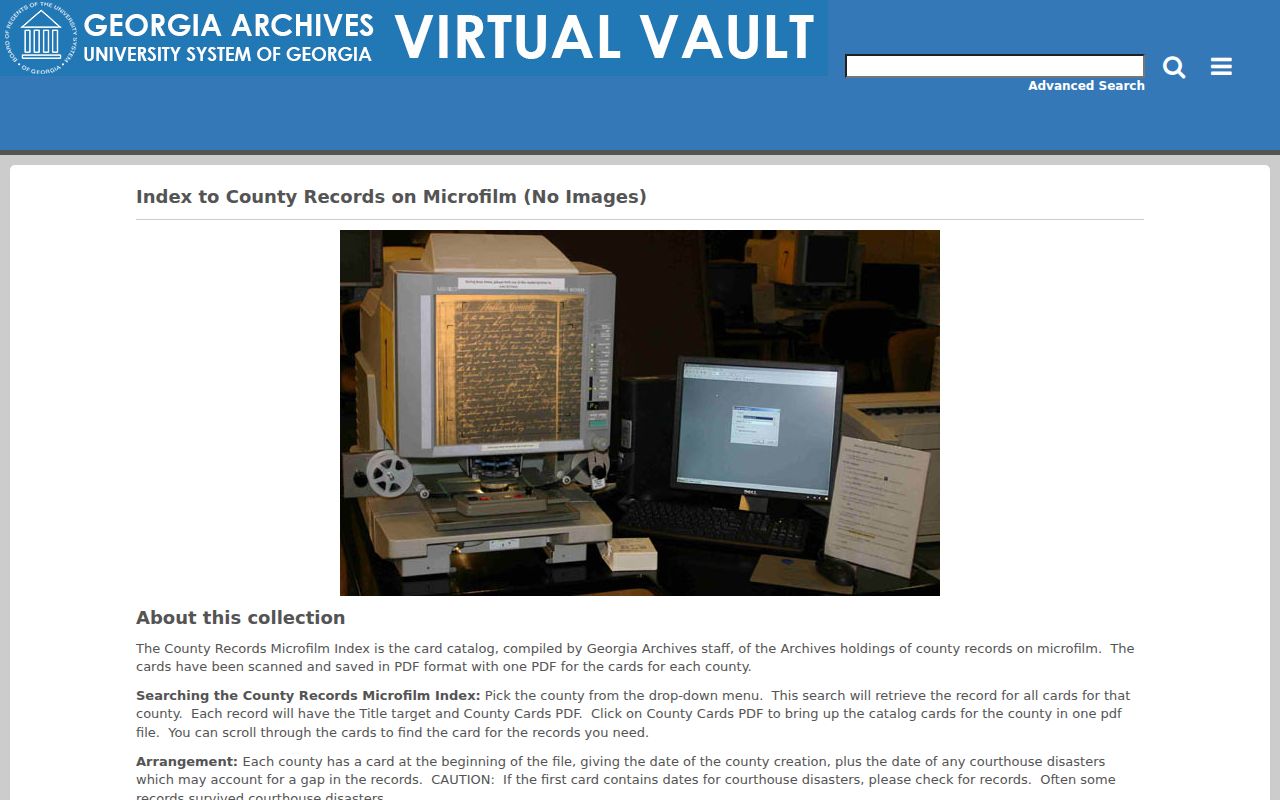
Read individual volume dates rather than assuming a flat cutoff.
Forsyth County Directory News
Historic newspapers can act like a narrative city directory. Search name variants with Cumming, a road, church, school, cemetery, or community. Legal notices may connect a person to an estate, name change, business, or land description. Obituaries and reunion reports add relatives and former communities. A news item proves its event, not continuous residence.
Forsyth Herald access begins with the library, while Digital Library of Georgia and Chronicling America widen the range. School yearbooks can identify classmates and faculty, but no complete official run was verified. Ask the library and school system before assuming a year exists online.
Build each search around the terms used in its period. A farm may be described by a family surname, militia district, creek, church, or road rather than a numbered home. Later reports may use a subdivision or school name. Search each term with the surname, then save the date and exact wording. Newspaper text recognition can misread faded type, initials, and narrow columns, so browse nearby issues when a text search fails. Married and maiden surnames deserve separate passes. The same applies to initials, suffixes, and alternate spellings. Keep the newspaper title, issue date, page, and column with every clipping. That citation lets a deed, probate file, marriage entry, or grave record confirm that the item concerns the correct Forsyth County family.
Trace Forsyth County Families
A sound family trail crosses sources and records doubt. Start from a known census, deed, marriage, grave, or news item. Move one date at a time. If a true local city directory or telephone book is available, place it between official records rather than making it carry the conclusion.
- Record the full citation for the first known person, date, and Forsyth County place.
- Check adjacent directory, telephone-book, census, or tax years for name and address changes.
- Search married and maiden names, initials, suffixes, spouses, trusts, and estates.
- Pair each listing with a deed, census household, marriage abstract, probate file, newspaper, or cemetery entry.
- Write down gaps and ask whether the missing year is absent from the collection or only from the web.
The 1950 census is the latest open schedule under the 72-year rule. It can anchor a mid-century home while newspapers and telephone books carry the trail forward. Earlier church registers and cemetery records matter before statewide civil registration.
NARA at Atlanta supports census, military, court, and agency work. The federal PACER system shown below is for later federal cases, not a household directory.
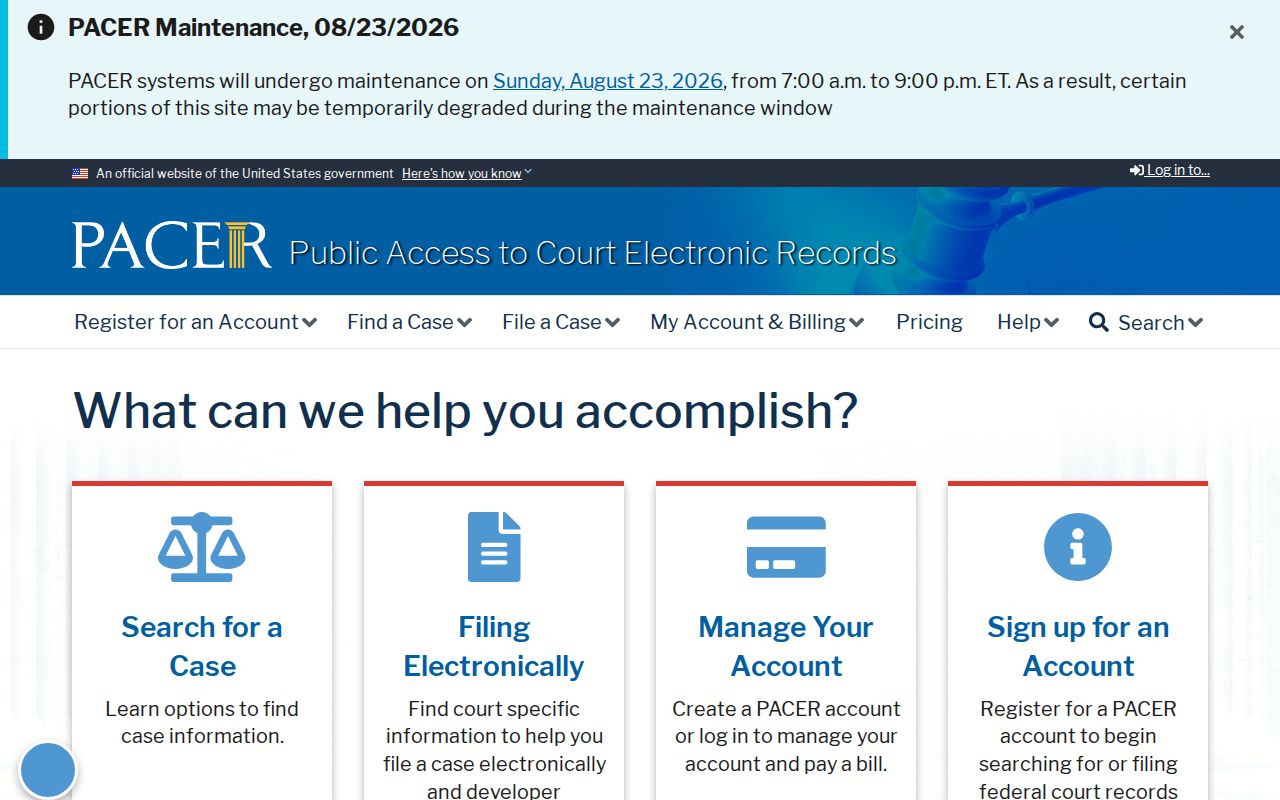
Use a case only when it fits the person and event established by stronger identifiers.